clepham

Center for Legal Pluralism (CLeP) Promotes Constitutional Protection for Belief Adherents through Legal & Human Rights Training

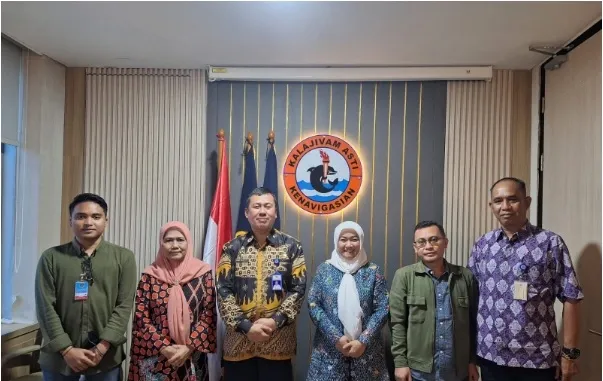
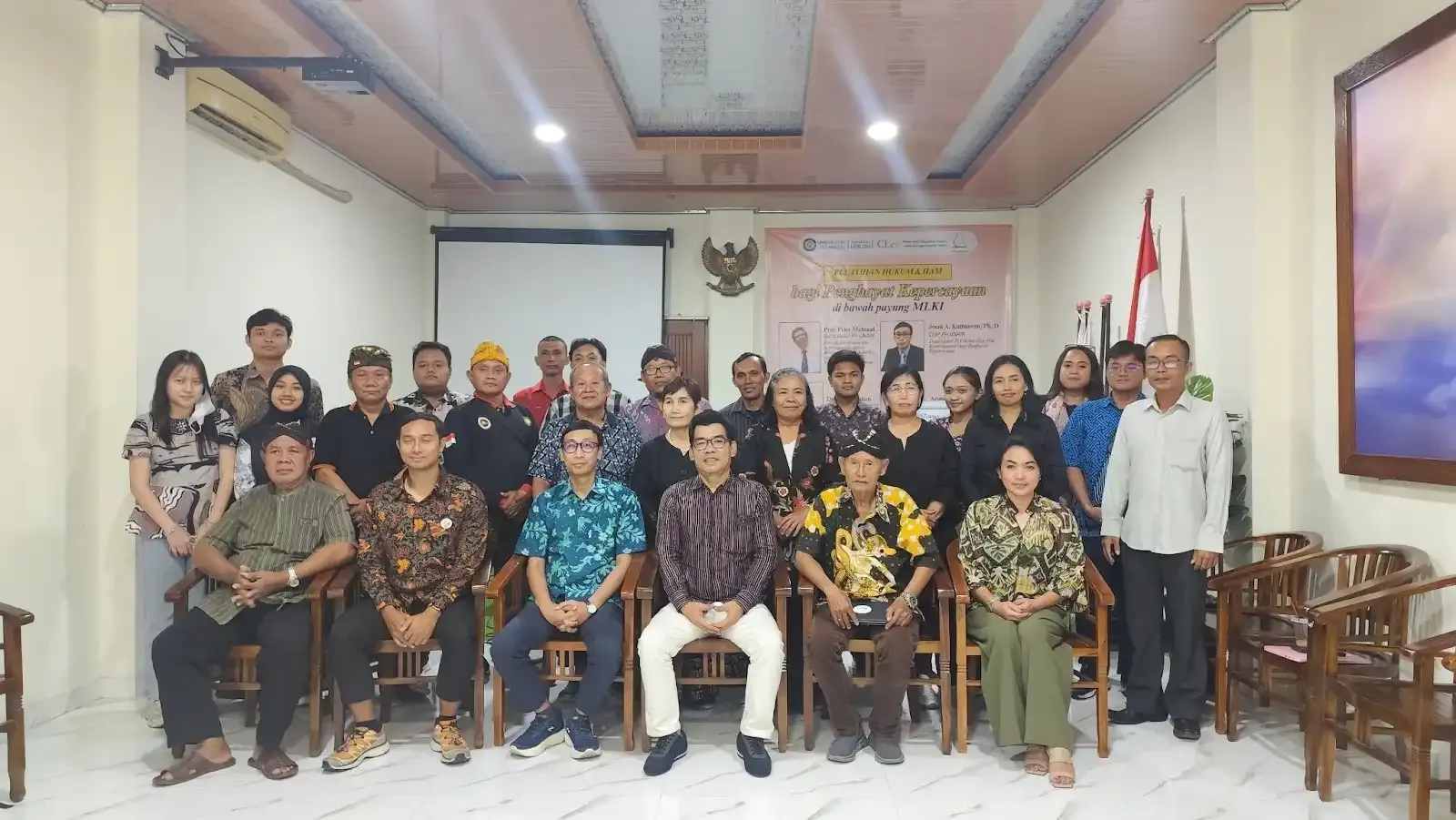
FH Public Relations (July 21, 2025) | The Faculty of Law, Airlangga University (FH UNAIR), through the Center for Legal Pluralism (CLeP), held a Legal & Human Rights Training for Belief Adherents under the umbrella of the Indonesian Supreme Council of Beliefs (MLKI). The two-day event, from Saturday, July 19, 2025, to Sunday, July 20, 2025, took place at Griya Nawasena, Surabaya. This training demonstrated academic concern for fulfilling the constitutional rights of minority belief groups in Indonesia, particularly believers who continue to face various structural and cultural challenges in accessing their rights as citizens.

The training featured several speakers from various backgrounds, including academics, practitioners, and community representatives, to provide a comprehensive understanding to participants. Prof. Peter Mahmud Marzuki, Professor of the Faculty of Law at Airlangga University (UNAIR), opened the discussion with a philosophical approach to religious freedom and diversity in the context of the lives of religious adherents in Indonesia. He emphasized the importance of state recognition of the existence of adherents as part of the spiritual diversity of Indonesian society, as well as the need to respect local values entrenched in society.

Joeni A. Kurniawan, Ph.D., The Director of CLeP presented material on the fundamentals of Human Rights (HAM) and constitutional rights for adherents of religious beliefs. He emphasized that adherents have equal standing before the law, as guaranteed by the Constitution. However, in practice, this community still faces various structural and legal challenges, particularly in accessing state administrative services. He also highlighted the importance of a strong understanding of national and international human rights instruments as part of a strategy to fight for substantive justice and comprehensive legal protection for minority religious groups.

Meanwhile, Dr. Akhol Firdaus, Secretary General of MLKI, provided a perspective from the field by revealing the social realities faced by adherents. He highlighted the various administrative challenges that still remain, from identity registration to access to public services. Although recognition of believers is stipulated in the constitution and laws, implementation at the local level is often hampered by discrimination and a lack of understanding from bureaucratic officials. This, he argued, poses a major challenge in ensuring that these rights are not only recognized normatively but also realized in daily practice.

Closing the series of resource sessions, Agung Salim W. M. Kn., Chair of the Committee and Deputy Chair of MLKI, emphasized the importance of synergy between believers’ communities and academic institutions. He stated that cross-sector collaboration is essential to strengthen the legal position of believers in the public sphere and encourage the development of inclusive and justice-oriented policies. Furthermore, he encouraged all participants to continue consolidating the advocacy movement to build a just and equitable legal ecosystem for all elements of society without exception.

Read Also: UNAIR Faculty of Law and Surabaya District Court Establish Strategic Partnership to Create an Impactful, Practice-Based Campus

With this training, FH UNAIR, through CLeP, reaffirms its role as a higher education institution that is not only oriented towards the theoretical development of legal knowledge but also committed to social transformation through the empowerment of marginalized groups. This activity demonstrates that academic work should not stop in the classroom and scientific journals, but must be present in real life, especially for those who have experienced inequality in accessing their rights. Going forward, it is hoped that this type of training can continue to be held sustainably as a space for education, advocacy, and cross-sector consolidation between academics, communities of believers, and policymakers.

Author: Angelique Novelyn

Editor: Masitoh Indriani
clepangel

Center of Legal Pluralism (CLeP) Study Center Discusses Discrimination Issues in Celebrating International Women’s Day

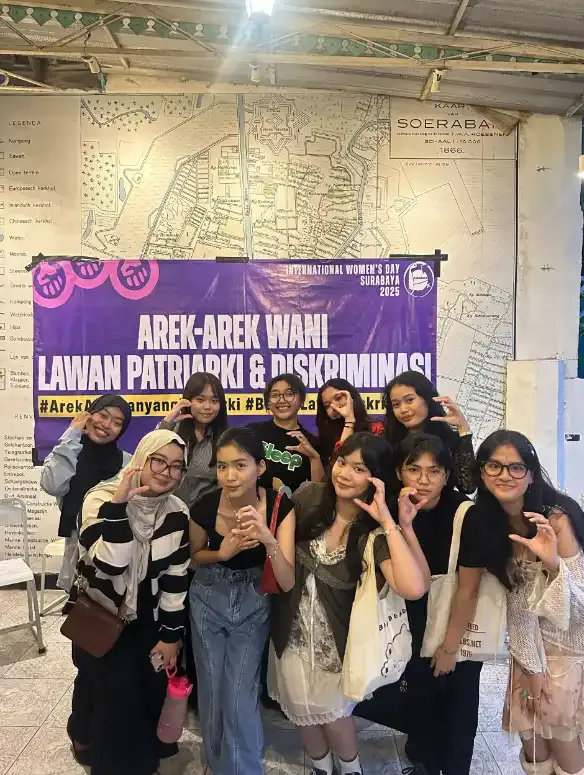
FH Public Relations (16/03/2025) | The Center for Legal Pluralism (CLeP) Study Center of the Faculty of Law, Universitas Airlangga (FH UNAIR), which has been studying the issues of religious diversity, beliefs, and gender identity, was invited to participate in a public discussion organized by International Women’s Day Surabaya in order to commemorate International Women’s Day. This activity took place at Lodji, Jalan Makam Peneleh No. 46, Peneleh, Genteng District, Surabaya, on Saturday (15/03/2025).

The commemoration of International Women’s Day Surabaya 2025 is a shared momentum to reflect on the various challenges and obstacles still faced by women and vulnerable individuals or groups who are marginalized in community and state life. Although there are a number of legal instruments that have regulated the protection, fulfillment, and respect for human rights, in reality, this is in contrast to conditions on the ground, where discriminatory practices such as gender-based violence, marginalization, stigma, and exploitation are still ongoing so that the fulfillment of Human Rights (HAM) cannot be achieved optimally.

This activity began with remarks from Mrs. Eka Hernawati, a member of the Federation of Indonesian Metal Workers Unions (FSPMI). In her remarks, Mrs. Eka said that women need to have a high spirit of courage in fighting for their work rights related to equal wages, protection from violence, and access to other basic rights. Therefore, she invited all women to strengthen further their solidarity in working together to fight for justice, in order to realize equality and better protection for all of us.

Read More: Strengthening Friendship, ANA, and Alumni of Doctoral Program of Law FH UNAIR Hold Breaking Fast and Tarawih Together

Davina Velinzhia, CLeP Intern Staff class of 2024, said that the presentation in the second session was delivered by Ms. Dian Jenni, a member of the Sapta Darma Community. In this second session, Kak Dian discussed the diversity of beliefs, which is part of the cultural wealth in society, so it needs to be appreciated and preserved. Kak Dian also emphasized that differences in beliefs should not be a divider but rather an opportunity to strengthen relationships between individuals and groups. Through this session, participants were invited to create a more open and respectful dialogue in order to create harmony in society’s social life.

“This activity is a new experience for me because it provides broader insight into the struggle for women’s rights and other diversities in Indonesia. I also got tips and tricks on how to be braver in fighting for my rights, especially in expressing opinions in public because sometimes my aspirations are rarely heard. The public discussion that I attended on Saturday became my provision to hold a women’s voice action on Wednesday, March 19, 2025,” she said.

Writer: Angelique Novelyn

Editor: Masitoh Indriani

pusat studi pluralisme hukum fh unair keluarkan rilis tentang perkawinan beda agama

UNAIR Study Center on Legal Pluralism Release on Interfaith Marriage

(5/10/2023) | Center for Legal Pluralism Studies (CLEP) Faculty of Law, Airlangga University (FH UNAIR) issued a press release regarding Supreme Court Circular Letter (SEMA) Number 2 of 2023 concerning Instructions for Judges in Adjudicating Cases on Applications for Registration of Marriages Between People of Different Religions and Beliefs. SEMA prohibits judges from granting requests to register marriages between people of different religions and beliefs.

In response to SEMA, CLEP FH UNAIR issued a press release containing the following points:

  1. Indonesian society is diverse and has religious diversity, so inter-religious marriage is a practice that is difficult to avoid.
  2. Constitutionally, the 1945 Constitution of the Republic of Indonesia classifies marriage and forming a family as human rights.
  3. The right to freedom of religion and freedom from discrimination or specific backgrounds, including religious experiences, are human rights guaranteed by the 1945 Constitution of the Republic of Indonesia and the Human Rights Law.
  4. The right to marry is also a human right inherent in every person. Everyone has the right to enjoy it regardless of their religious background, including couples of different religions.
  5. There is no single statement in the Marriage Law stating that interfaith marriages are invalid or prohibited, so prohibiting interfaith marriages is a wrong assumption. Apart from that, there is no teaching in any religion that forbids interfaith marriages.
  6. Religious teachings that are recognized as valid in Indonesia regulate interfaith marriages.
  7. The Republic of Indonesia is a democratic country, not a theocracy, so the government cannot be biased towards one teaching and/or religious sect.
  8. The Population Administration Law allows for interfaith marriages through court orders.
  9. Many jurisprudence in the form of court decisions have legalized interfaith marriages.

Based on the nine points above, CLEP FH UNAIR calls on the Supreme Court to immediately revoke SEMA Number 2 of 2023 to create legal certainty and fulfill marriage rights as a human right, especially for couples of different religions.

peneliti maroclaw fh unair bahas tata ruang laut flores dan selat malaka dari perspektif hukum laut

MAROCLAW Researcher Discusses the Spatial Planning of the Flores Sea and the Malacca Strait from the Perspective of the Law of the Sea

(19/8/2023) | The Ministry of Maritime Affairs and Fisheries of the Republic of Indonesia held a webinar on the Strategy for utilizing Marine Space in the Flores Sea and Malacca Straits last Tuesday (1/8/2023). The webinar, which was also broadcast live via the Youtube platform of the Ministry of Maritime Affairs and Fisheries of the Republic of Indonesia, also invited five speakers who were marine experts from various focus areas, namely Ir. Suharyanto, M.Sc. (Act. Director of Marine Spatial Planning); First Admiral TNI Dyan Primana Sobarudin, M.Sc. (Asopssurta Danpushidrosal); Benny Herlambang (Deputy Chair for Legal & Regulatory Affairs for the Association of Indonesian Sea Cable Communication Systems); Otte Sulistyo M. (GHG & ESG Manager Premiere Oil Andaman Ltd); and Dr. Nilam Andalia Kurniasari, S.H., LL.M. (Center for Maritime and Ocean Law Studies (MAROCLAW) Universitas Airlangga).

During the discussion, Dr. Nilam explained that shipping in the Malacca Strait was very crowded because the Malacca Strait is located between Indonesia, Malaysia, Thailand, and Singapore. The Malacca Strait, which is shaped like a funnel, makes this strait the busiest shipping strait flanked by four countries. The cables in the Malacca Strait are as crowded as the shipping lanes in the Malacca Strait. The cables do not only cross Asia but reach the United States.

“In Flores, it can be seen that not too many cables have been planted or placed around the Flores shipping line because, in international law, certain areas are the Exclusive Economic Zone (EEZ). When talking about EEZ, what applies is sovereign rights. Specifically regarding this cable, what applies is freedom. This means that when there is this freedom in a location where Indonesia no longer has jurisdiction, other countries are free to lay cables and underwater pipelines in that area,” said Dr. Nilam.

The coastal state has sovereign rights over the EEZ. Still, international law also allows other countries to have the freedom to plant or lay underwater cables or pipelines in areas that are no longer under the jurisdiction of the Indonesian state. However, in the case of Flores Waters, continued Dr. Nilam, the Indonesian state still has full authority over these waters, so other countries that want to plant or lay underwater cables or pipes in Flores Waters must ask permission from the Indonesian government.

“It’s the same in the Malacca Strait. Not only the EEZ, but Indonesia also has a territorial sea there. The treatment in the Malacca Strait should be the same as in Flores waters,” explained Dr. Nilam.

Presidential Regulation Number 29 of 2023 and Presidential Regulation Number 30 of 2023 have regulated the implementation of sovereign states. This enforceability must be considered by anyone who implements regulations.

“Don’t let the laying of underwater cables disrupt shipping. Safety of navigation is important. Especially for the Malacca Strait, you have to pay attention because if there is an accident in the Malacca Strait which results in delays in shipping, then the whole world will lose, not just Indonesia,” added the UNAIR and NUS alums.

Dr. Nilam said that Flores waters have the potential to become an alternative route for laying underwater cables and pipes. She emphasized that the parties should pay more attention to Flores waters, which are rich in marine life and not be damaged by the planting and laying of underwater cables and pipes.

“Indonesia has full sovereignty in this area, so attention must be paid to the spatial layout,” she concluded.

diskusi publik hrls problematika revisi uu tni dari prespektif hukum politik dan hak asasi manusia

HRLS Public Discussion: Problems in Revision of the Military Law from a Legal, Political, and Human Rights Perspective

(8/8/2023) | Last Thursday (27/7/2023), the Human Rights Law Study or HRLS of the Faculty of Law, Universitas Airlangga, returned with its public discussion, which was no less interesting than the previous public discussions. This time the topic raised was the Problems of Revision of the Military Law from a legal, political, and human rights perspective. As for the invitees to the public discussion this time, Dr. Toetik Rahayuningsih, S.H., M.Hum .; Dr. Al Araf, S.H., M.T.; Joko Susanto, S.IP, M.Sc.; and Abdul Wahid, S.H., M.H. The three speakers previously presented different topics for the material each of them wanted to present.

The first speaker was Dr. Toetic. He emphasized the direction of the material regarding the urgency of the TNI (national army) to enter into the executive realm. Then Dr. Al Araf, as the second speaker, emphasized the fundamental aspects of the army itself. He said, “Meanwhile, if the military junta becomes a strong or powerful party, then authoritarianism can return, reflecting on foreign conflicts in Thailand and Myanmar because the military does not recognize the Criminal Procedure Code but kill or be killed. Because the military was originally from the defense function, if there is reinforcement from the TNI Bill, it will occupy a civilian position that is not appropriate.”

Then Joko Susanto, as the third speaker, saw the revision of the TNI Law as something that could be reflected in the real world. In closing words, he said, “The revision of the TNI Bill should lead to geopolitics and connectivity, not even blurring the boundaries between military and civilian functions,” Then continued Abdul Wahid as the fourth and final speaker who took many historical aspects of the change Military Law. The suggestions proposed are “the active TNI can enter the ministry and become a regional head in the Military Bill because of the membership surplus.” So the surplus should have been resolved internally, such as reducing parts, forming new divisions, early retirement, and so on,”

para peneliti maroclaw kunjungi kantor distrik navigasi benoa bali teliti kesehatan lingkungan laut

Maroclaw Researchers Visit Benoa Navigation District Office, Bali: Research on Marine Environmental Health

(6/8/2023) | On Thursday, 28 July 2023, a Maritime and Ocean Laws Studies (Maroclaw) research team conducted a scientific visit to the Benoa Class II Navigation District Office, Bali. This visit aims to carry out basic research on the technical aspects carried out in monitoring ship surveillance in the Lombok Strait, as well as to assess the health of the marine environment in the area.

Maroclaw, a research group of experts in their fields, was represented by three researchers: Dr. Nilam Andalia Kurniasari, Dr. Enny Narwati, and Indah Camelia. They were also accompanied by a research assistant, Kautsar Ismail.

The Benoa Class II Navigation District Office enthusiastically welcomed the Maroclaw research team’s visit. The Head of the Benoa Class II Navigation District Office, Azhar Karim, S.H., S.Pd., M.M., welcomed the researchers and stated that this visit was a positive step in increasing understanding of the technical aspects related to monitoring and supervising ships in the Lombok Strait.

During their visit, the Maroclaw research team did not only focus on the technical aspects regarding the presence of ships in the Lombok Strait but also visited VTS (Vessel Traffic Service) Benoa to gain further technical insights related to the presence of ships in the area.

“This visit is a valuable opportunity for Maroclaw to conduct more in-depth research on the marine environment around the Lombok Strait. In addition, we also hope to understand the role of the Benoa Class II Navigation District Office and Benoa VTS in maintaining the security and safety of shipping in this region,” said Dr. Nilam Andalia Kurniasari, one of the researchers from Maroclaw.

Dalmonce, S.T., Head of Administrative Sub-Division of the Benoa Class II Navigation District Office, and I Ketut Aries Nakula Mandiana, ST., MMTr, Head of the Logistics Section, also provided an explanation of the duties and responsibilities of the Benoa Navigation District Office in supporting the continuity of activities shipping and preserving the marine environment in the region.

maroclaw
maroclaw

This visit is expected to provide valuable input for Maroclaw and also be an excellent first step in building collaboration between research institutions and relevant government agencies to increase awareness and protection of the marine environment.

With increasing attention to aspects of the marine environment, it is hoped that a common understanding will be created to maintain the sustainability of the maritime ecosystem in the Lombok Strait and its surroundings, as well as to have a positive impact on the shipping and tourism sector in Bali and its surroundings.

Penulis: Kautsar Ismail

Tim-Maroclaw-Universitas-Airlangga

Deepening Safety Studies on TSS and ALKI, Maroclaw Airlangga University Attends Discussion with the Directorate of Navigation of the Ministry of Transportation

(19/7/2023) | The Center for Maritime and Ocean Law Studies (Maroclaw), as part of the Maritime Research Team at Universitas Airlangga, recently visited the Directorate of Navigation at the Ministry of Transportation of the Republic of Indonesia. The meeting held on Tuesday (27/6/2023) aims to gain insight into the shipping safety monitoring system for the Traffic Scheme Separation (TSS) and the Indonesian Archipelagic Sea Lanes (ALKI). Capt. Budi Mantoro, M.Sc., M.Mar., Director of Navigation, was also present and directly led the discussion.

Maroclaw, in this activity, was represented by a Research Team, which included several UNAIR FH lecturers, including Dr. Nilam Andalia Kurniasari, Dr. Dina Sunyowati, and research assistant Kautsar Ismail. The discussion was specifically aimed at understanding the monitoring mechanism applied in the Traffic Separation Scheme (TSS) and the Indonesian Archipelagic Sea Lanes. (ALKI).

Maroclaw FH UNAIR, which is currently well known for its expertise in maritime and maritime law studies, is committed to continuing to contribute to developing the maritime sector in Indonesia. This visit to the Directorate of Navigation, it is a valuable opportunity to learn about maritime practices and identify areas that can be improved to ensure the safety and security of maritime activities in Indonesian waters.

Capt. Budi Mantoro, M.Sc., M.Mar., conveyed some critical knowledge in practice regarding maritime affairs, as well as various challenges faced by the Directorate of Navigation in maintaining compliance and navigational safety rules that are applied in Indonesian waters.

Dr. Nilam Andalia Kurniasari and Dr. Dina Sunyowati, as part of the Maroclaw research, were actively involved in discussions with officials from the Directorate of Navigation to understand the complexity of the existing ship traffic monitoring system.

The meeting ended with a commitment between the two sides to continue dialogue and cooperation in the future. Maroclaw, as a leading study center in maritime and maritime law studies, continues to improve its quality and expertise in developing policies and regulations that promote maritime safety and security in Indonesia. “Thank you to Marcolaw for his commitment and concern in overcoming the challenges to continue to ensure ship compliance and the safety of maritime activities in Indonesian waters,” said Capt. Budi Mantoro, M.Si., M.Mar. as the Directorate of Navigation.

“Hopefully, the collaboration between academic institutions such as Maroclaw and government agencies such as the Directorate of Navigation can continue to be carried out to realize the vision and mission of a conducive environment for ships to operate safely and efficiently in Indonesian waters, which will ultimately contribute to the growth and prosperity of the maritime sector for this country,” said Capt. Budi Mantoro.

Peneliti-FH-UNAIR-menjadi-Peneliti-Utama-dalam-Penyusunan-Background-Study-RPJMN-2025-2029

UNAIR Faculty of Law Researcher Becomes Main Researcher in Compilation of 2025-2029 RPJMN Background Study on Infrastructure and Maritime Issues

(17/7/2023) | On Wednesday, 13 July 2023, Dr. Nilam Andalia Kurniasari, a lecturer and researcher at the Center for Maritime and Ocean Law Studies (MAROCLAW) Faculty of Law, Airlangga University (FH UNAIR), successfully completed the preparation of the National Medium Term Development Plan (RPJMN) Background Study 2025 – 2029 as well as discussing and presenting the results of the study initiated by the Directorate of Law and Regulation, Ministry of National Development Planning/National Development Planning Agency (PPN/Bappenas) through a FGD attended by various parties from the Indonesian National Shipowners’ Association (INSA), Ministry of Transportation, academics, and Indonesian Maritime Law practitioners. For the past two months, the Maritime Law expert from FH UNAIR has been trusted by the Ministry of National Development Planning/Bappenas as the Main Researcher in preparing the 2025 – 2029 RPJMN Background Study in the field of Infrastructure and Maritime issues.

The FGD, which took place in Jakarta, aims to gain a deeper understanding of maritime legal issues related to domestic shipping policies, especially regarding the application of the maritime cabotage principle in Indonesia, which will be one of the focuses in the 2025-2029 RPJMN. “I am honored to have been entrusted by the Ministry of National Development Planning/Bappenas to be the main researcher in preparing the 2025-2029 RPJMN Background Study on the strategic issue of implementing the maritime cabotage principle in supporting the development of the Indonesian shipping industry. As an academic, I am pleased that the results of the academic studies I have carried out so far have become part of an important state document, namely the 2025-2029 RPJMN,” said Dr. Nilam Andalia Kurniasari.

In addition, Dr. Nilam Andalia also said that reasonable regulations must encourage the growth of the Indonesian shipping industry and protect national interests. Effective oversight of compliance with the maritime cabotage policy is also critical to ensure proper implementation.

In the FGD activities and the results of his research, Dr. Nilam Andalia Kurniasari said that maritime cabotage is a principle whose implementation can protect various national interests. Not only is it full of protection for the interests of the country’s economic growth sector from the shipping industry, but the application of maritime cabotage can also protect other national interests that are no less important, namely defense and security. Therefore, he advised that maritime cabotage must continue to be implemented in Indonesia.

Contributing writer: Kautsar Ismail

MAROCLAW FH UNAIR Research Team Visits the Indonesian Ministry of Maritime Affairs and Fisheries to Follow up the Collaboration on Marine Environmental Health Studies

(7/7/2023) | The research team belonging to the Center for Maritime and Ocean Law Studies (MAROCLAW) Faculty of Law, Universitas Airlangga (FH UNAIR), Dr. Patchouli Andalia Kurniasari and Dr. Dina Sunyowati, visited the Ministry of Maritime Affairs and Fisheries of the Republic of Indonesia last Monday (26/6/2023). They met with the Director of Marine Spatial Planning, Ir. Suharyanto, M.Sc who was also accompanied by Ir. Nilfa Rasyid as Coordinator of the National Marine Spatial Group to discuss research studies related to the health of the marine environment in the Traffic Separation Scheme (TSS) and Indonesian Archipelagic Sea Lanes (ALKI) areas.

The visit occurred at the Office of the Ministry of Maritime Affairs and Fisheries, located at Jalan Medan Merdeka Timur number 16, Central Jakarta. The visit is also in the context of building positive communication between researchers and the ministry. It is expected to open opportunities for further collaboration in the research and development of marine environmental policies.

The meeting discussed many things, including telecommunications cables at sea which could cause pollution to the underwater environment. Currently, telecommunications cables under the sea are owned by other countries (not Indonesia) that cross national borders. In addition to telecommunication cables, the meeting also discussed substantial matters regarding policies and relations between Indonesia and other archipelagic countries.

Of course, the two researchers from MAROCLAW FH UNAIR visited with extensive knowledge and experience in marine and environmental law. Dr. Nilam Andalia Kurniasari is a marine law expert competent in protecting the marine and maritime environment—meanwhile, dr. Dina Sunyowati is an expert in marine resource management, marine-environmental law, and sustainable development.

“The Ministry of Maritime Affairs and Fisheries, together with academics and the public, must jointly pay attention to pollution in coastal areas. As an initial step, it is also necessary to map the scale of the polluted coast so that efforts to deal with and recover it can be better coordinated,” said Dr. Patchouli.

The Director of Marine Spatial Planning welcomed the visit of MAROCLAW FH UNAIR and expressed their enthusiasm in discussing research studies related to marine environmental health. This meeting is a form of collaboration between academics and the government to increase understanding and sustainable management of the marine environment.

The Ministry of Maritime Affairs and Fisheries of the Republic of Indonesia also pays close attention to marine environmental issues. It is committed to protecting the sustainability and health of Indonesia’s marine ecosystems. Collaboration with MAROCLAW FH UNAIR is essential in developing scientific-based understanding and policies for protecting and conserving marine resources.

HRLS FH UNAIR Holds Webinar Series to Commemorate International Women’s Day with the Theme of Women & Technology

The world celebrates International Women’s Day every March 8. International Women’s Day is not only celebrated in the form of celebration, but also a reminder of women’s rights and how women are an essential part of society. International Women’s Day is celebrated in various ways around the world. Heads of the state usually give state speeches about the current situation regarding women’s rights and policies that the state has to promote gender justice. Giving flowers as a symbol to women is also carried out in several European countries and the United States, especially mimosa flowers. The mimosa flower is considered a symbol of honor, dignity, and majesty.


Indonesia also took part in celebrating International Women’s Day. There are many ways to do this, including holding actions, conferences, seminars, and other activities based on women’s issues and gender justice. In commemoration of International Women’s Day, the Center for Human Rights Law Studies at the Faculty of Law, Universitas Airlangga (HRLS FH UNAIR) collaborated with the Center for Gender and Children Studies (PSGA) Surabaya State University), Center for Anti-Corruption and Democracy (PUSAD) Muhammadiyah University Surabaya, DigitalMAMA .ID, Center for Maritime and Ocean Law Studies (MAROCLAW) FH UNAIR, and the Alliance of Independent Journalists (AJI) Surabaya held International Women’s Day 2023: 3 Literacy Workshop Series “Becoming Powerful Women in the Cyber World”. The activity, which was held on Wednesday (8/3/2023) was adjusted to the theme set by the United Nations (UN), namely “DigitALL: Innovation and Technology for Gender Equality”.


The webinar series consists of speakers from the six collaborating institutions, namely Satria Unggul W. Prakasa (PUSAD), Catur Ratna Wulandari (Editor In Chief DigitalMAMA.ID), Hanaa Septiana (AJI), Masitoh Indriani (HRLS), Franky Butar Butar (HRLS), Putri Aisiyah R. Dewi (PSGA), Inge Christanti (Center for Human Rights Studies at the University of Surabaya), and Dr. Sjafiatul Mardliyah (PSGA). Apart from discussing information literacy, this webinar series also discusses personal data protection and online gender-based violence (KGBO).


“We have adapted the theme of this series of digital literacy classes to commemorating International Women’s Day from the United Nations, which focuses on the importance of fulfilling women’s rights in the digital era. This theme is interesting and is relevant to the current situation of women in Indonesia,” said Putri Aisiyah, PSGA researcher.


Based on a digital literacy index survey conducted by the Ministry of Communication and Information of the Republic of Indonesia (Kominfo RI) in 2022, the digital literacy index for women is lower than that for men. From a scale of 1 – 5, the digital literacy index for women only reaches 3.5 for the digital skills dimension, 3.6 for digital ethics, and the lowest is in the digital safety dimension, at point 3.07. Currently, various aspects of life have experienced digitalization. Digitalization in multiple aspects of life positively impacts and can bring about better changes. However, digitalization also can potentially violate the rights of vulnerable groups, including women. Many cases place women as victims of digitalization, ranging from lacking access to the digital economy to KBGO.


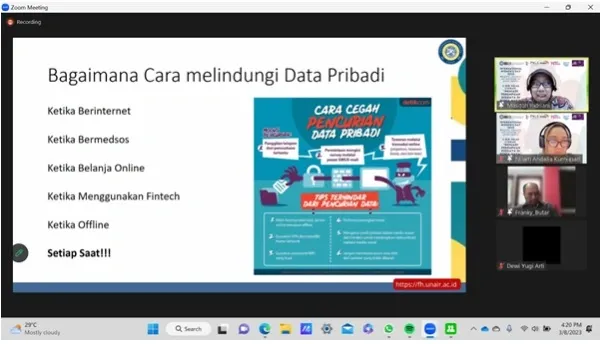
“The aim of this webinar series is for women to become more empowered in the virtual space, to reduce the gap for women to technological developments, and to provide protection when using technology. To support this goal, the protection of personal data is required. Personal data needs to be protected because it is part of privacy. This personal data includes general personal data consisting of identities ranging from full names to marital status and specific personal data ranging from health information to personal financial data,” said Masitoh Indriani, HRLS researcher.


Masitoh also explained what forms of crime are lurking on personal data, such as collecting personal data that is not his to benefit himself or others, deliberately and unlawfully disclosing personal data that is not his, intentionally and illegally using personal data that do not belong to him, intentionally falsifying personal data to benefit himself or others, and deliberately selling or buying personal data.


Apart from discussing the importance of maintaining personal data privacy, the presenters also explained how to increase women’s competence as capable actors who produce, distribute, and consume information safely and according to the culture of digital society. Apart from that, it also discussed how to respond to and recognize the modes of KBGO.